
How to Choose the Best AI Courses for Your Career in 2025
Artificial intelligence is no longer a distant futuristic concept—it is actively reshaping software development, business operations, financial analysis, healthcare, and digital marketing. In tech hubs across India, including Pune, Bengaluru, and Hyderabad, companies are increasingly searching for developers and analysts who understand how to build, fine-tune, and deploy intelligent systems. As a result, the demand for structured AI courses has surged among college students, fresh graduates, and working professionals looking to transition into modern tech roles.
However, with hundreds of programs available online and offline, selecting the right learning path can feel overwhelming. Many prospective learners struggle to differentiate between surface-level introductory modules and comprehensive, industry-relevant training. In this guide, we will break down what you should expect from quality AI courses, key skills you need to learn, and how to evaluate training programs so you can make an informed choice for your career.
Why Artificial Intelligence Skills Matter Today
The tech industry is undergoing a structural shift. Traditional software engineering practices are increasingly incorporating machine learning models, natural language processing pipelines, and automated decision-making engines. Knowing standard programming syntax is still essential, but combining programming knowledge with data science and machine learning capabilities makes a professional significantly more adaptable.
By enrolling in practical AI courses, learners gain a structured framework for understanding complex mathematical concepts, algorithmic design, and real-world deployment challenges. Rather than attempting to piece together disjointed video tutorials, a well-organized curriculum helps students construct a cohesive mental model of how artificial intelligence actually works under the hood.
Core Components of a Comprehensive AI Curriculum
When evaluating different AI courses, it is crucial to examine the syllabus carefully. A rigorous program should balance theoretical foundations with hands-on technical execution. Here are the core topics a strong curriculum must cover:
1. Programming Foundations & Data Preprocessing
Python is the undisputed language of modern AI. A practical course must start with advanced Python concepts, focusing on data manipulation libraries such as NumPy and Pandas. Learners need to understand how to clean raw data, handle missing values, structure datasets, and perform exploratory data analysis before feeding information into any machine learning model.
2. Classical Machine Learning Algorithms
Before jumping into deep neural networks or complex generative models, students must master foundational machine learning algorithms. Effective AI courses teach both supervised and unsupervised learning techniques using libraries like Scikit-learn. Key algorithms include:
- Linear and Logistic Regression: Essential for predictive modeling and binary classification tasks.
- Decision Trees and Random Forests: Useful for structured data analysis and feature importance evaluation.
- K-Means Clustering: Important for segmenting customer data and finding hidden patterns.
- Support Vector Machines (SVM): Helpful for high-dimensional classification problems.
3. Deep Learning and Neural Networks
Deep learning powers image recognition, voice processing, and advanced text analytics. A solid curriculum introduces artificial neural networks (ANNs), convolutional neural networks (CNNs) for computer vision tasks, and recurrent neural networks (RNNs) or Transformers for sequence data. Practical learning involves implementing these networks using frameworks like TensorFlow or PyTorch.
4. Generative AI and Large Language Models (LLMs)
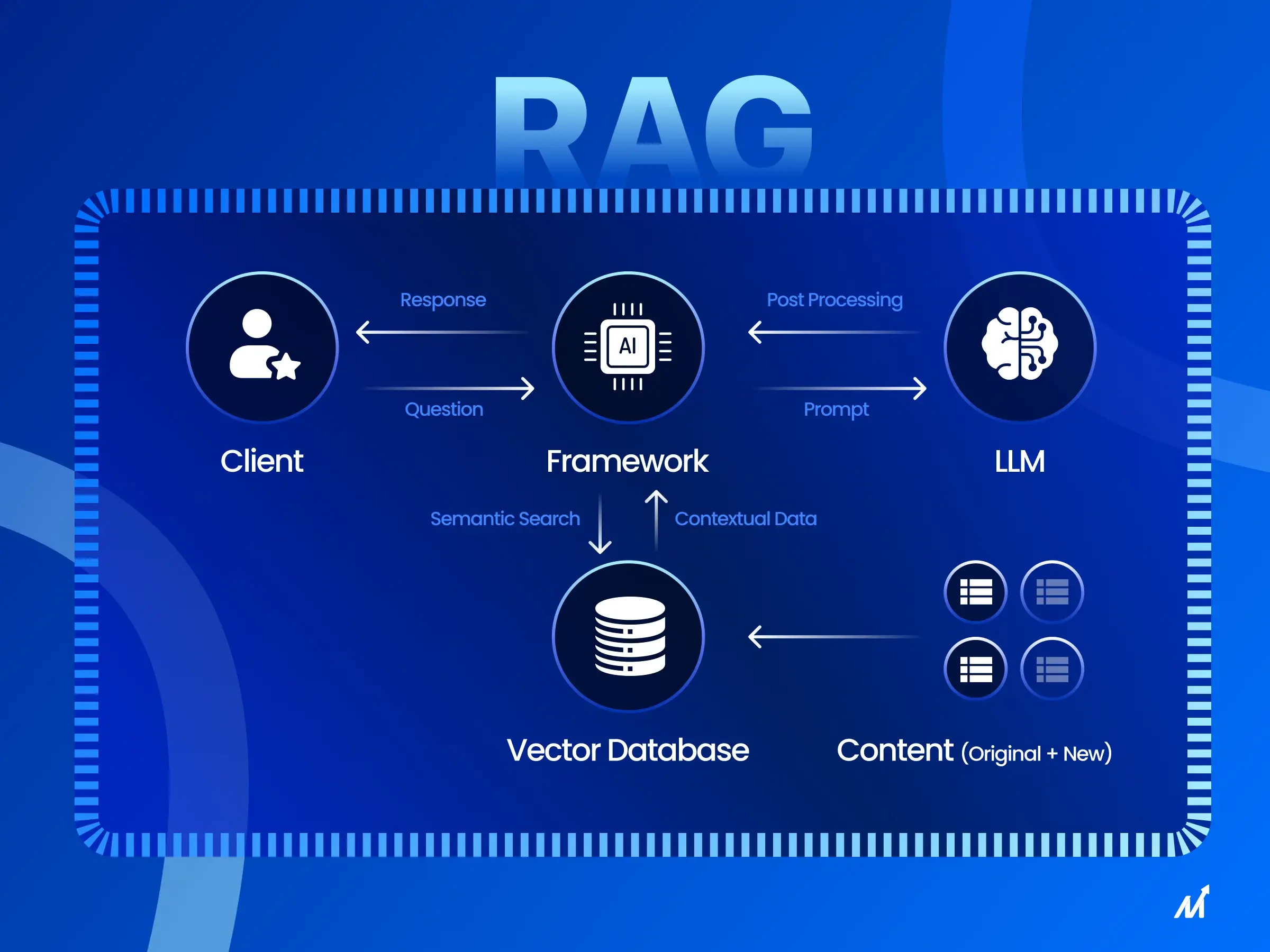
In the current tech landscape, understanding Generative AI is a major advantage. High-quality AI courses go beyond basic prompt writing to cover advanced concepts like Retrieval-Augmented Generation (RAG), API integration with platforms like OpenAI, vector databases (such as Pinecone or ChromaDB), and fine-tuning lightweight models for custom applications.
5. Model Deployment and MLOps Basics
A machine learning model locked inside a Jupyter Notebook is not helpful to a business. Modern software teams require developers who know how to convert models into production-ready Web APIs using frameworks like FastAPI or Flask, containerize them using Docker, and deploy them on cloud infrastructure. Ensure the course you choose includes practical deployment exercises.
Who Should Take an AI Course?
Artificial intelligence training is beneficial across various technical backgrounds, but your entry point depends on your current skills:
- Computer Science & IT Graduates: Fresh graduates looking to stand out in the entry-level job market by gaining practical project experience beyond standard academic theory.
- Software Engineers & Web Developers: Professionals who want to integrate AI capabilities into existing web applications or transition into specialized Machine Learning Engineer roles.
- Data Analysts & Business Intelligence Professionals: Professionals looking to upgrade from descriptive analytics (SQL, Excel, PowerBI) to predictive and prescriptive analytics using Python and machine learning.
- Non-Tech Professionals seeking AI Literacy: Product managers, marketers, and operations specialists who need to manage AI-driven projects, write effective prompts, and understand technical feasibility.
How to Choose the Right AI Course for Your Goals
To avoid spending time and money on passive learning that leads nowhere, evaluate prospective AI courses using the following criteria:
Look for Project-Based Learning
Reading code or watching lecture videos is not enough to build problem-solving intuition. Check if the course includes real-world assignments, such as building a customer churn prediction engine, creating a text summarization tool, or deploying a vision-based defect detection system. Building 3 to 4 portfolio projects gives you tangible proof of skill when talking to recruiters.
Demand Personalized Mentorship and Code Reviews
Self-paced video libraries often suffer from high drop-out rates because students get stuck on environmental errors or complex mathematical concepts. Live interactive sessions, practical lab workouts, and direct mentor feedback allow you to resolve roadblocks quickly and learn industry-standard coding standards.
Evaluate the Depth of Prerequisites
Be cautious of programs that promise to make you an expert AI engineer in two weeks without requiring any coding or math. True artificial intelligence development requires a basic grasp of linear algebra, calculus, probability, and standard programming logic. High-grade courses provide preparatory bootcamps or foundation modules to help beginners build this baseline safely.
Look for Honest Career Guidance
Avoid institutions that make unrealistic promises about guaranteed job placements or fixed starting salaries. Instead, choose platforms that provide transparent career support, such as resume reviews, portfolio optimization, mock technical interviews, and connections to realistic local and remote hiring channels.
Preparing Yourself Before Starting a Course
If you plan to enroll in AI courses in the coming months, taking a few proactive steps can help you hit the ground running:
- Brush up on basic Python: Practice writing functions, working with lists, loops, and understanding object-oriented programming concepts.
- Review fundamental statistics: Familiarize yourself with mean, median, standard deviation, probability distributions, and basic linear algebra concepts like matrix multiplication.
- Set up your environment: Install Python, set up Visual Studio Code, and experiment with running basic scripts inside Jupyter Notebooks.
Conclusion
Investing time in learning artificial intelligence is one of the most practical decisions a tech learner can make today. However, your success depends heavily on choosing a structured, hands-on learning environment that emphasizes problem-solving over memorization. By focusing on comprehensive curricula—covering Python, classical machine learning, deep learning, generative AI, and model deployment—you build a stable, adaptable career foundation ready for the evolving tech ecosystem.
If you are looking for practical, mentor-led tech education in Pune, explore structured learning tracks at FutureCorp Academy. Through practical projects, continuous feedback, and dedicated career preparation support, learners build real skills that translate directly into modern engineering roles.
Founder, FutureCorp Academy — helping students turn classroom theory into practical, industry-ready skills.
Comments
Leave a comment
Comments are reviewed before they appear.